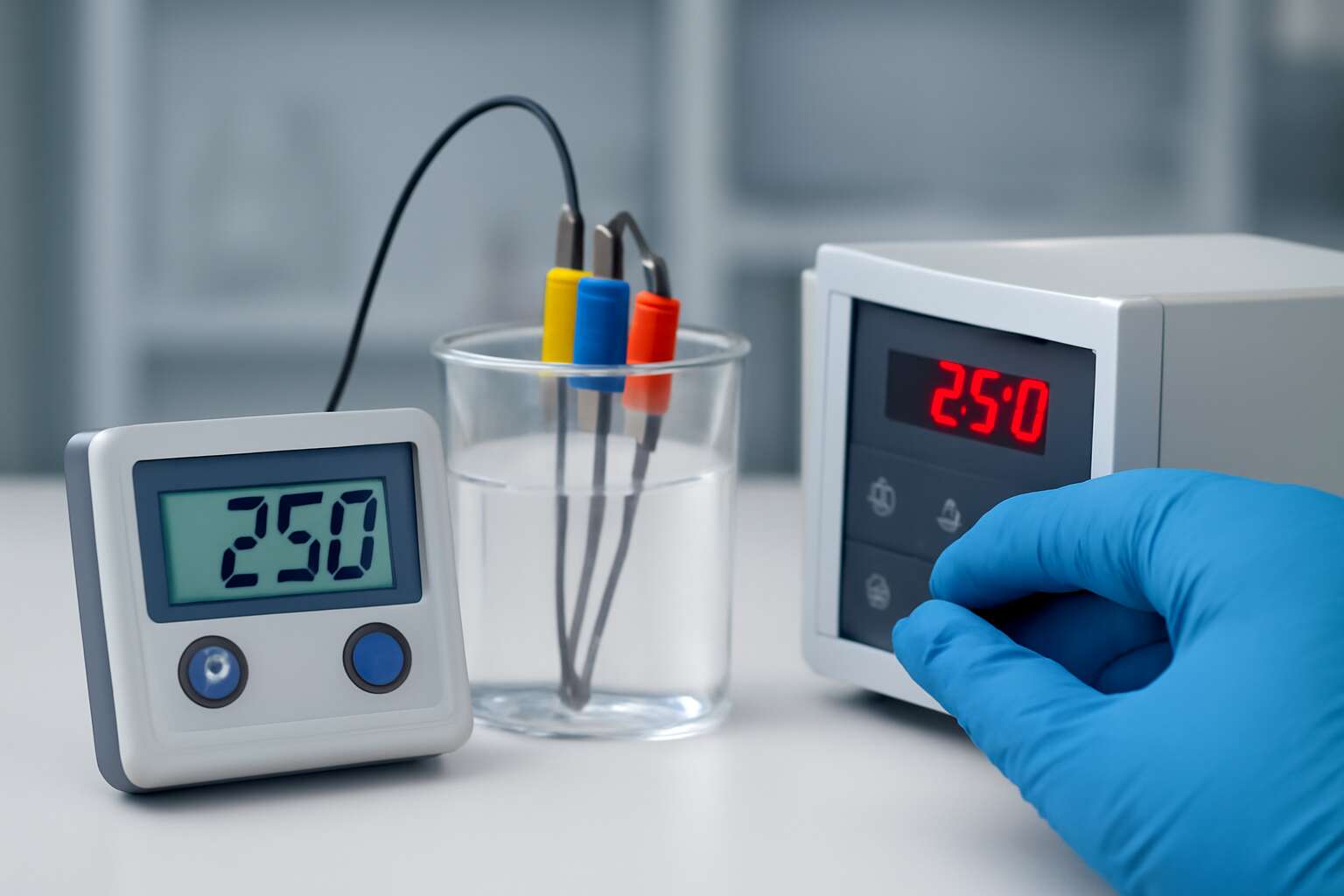
Core concepts of temperature measurement in the laboratory
Why accurate temperature matters in experiments
In laboratories across South Africa, a mere 0.5°C drift can tilt outcomes; precision isn’t optional—it’s survival. Core concepts of temperature measurement rest on stable baselines, consistent sensing, and careful calibration, all woven into daily workflows that underpin every assay and control.
Choosing the right equipment demands attention to stability, response time, and traceability. In the mix, the essentials are:
- Traceability to SANAS standards
- Probe design reducing thermal gradients
- Durability for daily lab use
From thermocouples to RTDs and infrared sensors, the lab equipment used to measure temperature should be rugged, easy to integrate with data systems, and suited to your sample type. Like guardians of a quiet, crystalline balance, they safeguard accuracy from bench to bench.
Fundamental units and standards for temperature
Every precise reading carries a quiet vow of reliability. Core concepts anchor measurement in stable definitions rather than fleeting intuition. Temperature is a quantity defined by universal constants, yet it speaks through scales we can trust in the lab: Kelvin for absolute terms and Celsius for daily practice. For teams evaluating lab equipment used to measure temperature, grounding readings in Kelvin and Celsius is more than science—it’s craft.
- Kelvin: SI base unit for thermodynamic temperature
- Celsius: Practical scale defined by the Kelvin
- ITS-90: International Temperature Scale providing a practical reference for laboratories
Equally essential is traceability. Calibrations align with national and international standards, ensuring consistency from instrument to instrument and lab to lab. In South Africa, that path often travels through SANAS-accredited laboratories, binding thermometry to a globally recognized ladder of accuracy.
Thermal equilibrium and measurement uncertainty
Thermal equilibrium is the quiet baseline of any serious measurement. When two bodies share the same temperature, heat flow stops and readings settle. In practice, this makes readings trustworthy only if the system has had time to equilibrate, free from stray heat or drafts.
Measurement uncertainty lives in the margins of every figure. It’s the sum of calibration limits, sensor design, and how the probe sits in the sample. The exact figure you report depends on how well the lab equipment used to measure temperature is engineered and applied.
- Probe placement and contact quality
- Thermal lag and sensor response time
- Environmental gradients and drafts
- Calibration traceability and drift
- Instrument resolution and uncertainty budgeting
To keep readings honest, many labs emphasise traceability and repeatability, ensuring every measurement aligns with a consistent standard across diverse conditions.
Common temperature ranges in lab work
In South Africa’s research corridors, a temperature reading is more than a number—it’s a verdict about an experiment’s credibility. Core concepts of temperature measurement in the laboratory hinge on stability, traceability, and thoughtful sensor interaction. The right lab equipment used to measure temperature shapes not just a single reading, but a pattern of confidence that travels from bench to publication, across shifts and samples, even when conditions shift with load shedding or a cooling breeze.
Common temperature ranges in lab work span from cryogenic storage at -80 to -20°C to room work around 20-25°C, and up to 37°C for many biological incubations. These bands influence how instruments are selected, how often they’re calibrated, and how data is recorded in South Africa’s diverse lab environments.
Key measurement principles (contact vs non-contact)
Temperature is the quiet judge of results. In South Africa’s labs, a single reading can tilt credibility. “Accuracy is the currency of discovery,” a veteran technician reminds us. Core concepts hinge on stability and sensor interaction.
Two measurement paths define work: contact and non-contact. Contact sensors—thermocouples, RTDs, and thermistors—touch the sample, giving fast, direct readings. Non-contact devices—infrared thermometers and thermal imagers—read heat from a distance but stay sensitive to emissivity and reflections.
Choosing the right lab equipment used to measure temperature matters for data integrity. To visualise options, consider these categories:
- Contact sensors: thermocouples, RTDs, thermistors
- Non-contact sensors: infrared thermometers, thermal cameras
Calibration, drift control, and traceability keep readings trustworthy across shifts and samples. Selection hinges on range, response time, and whether you must touch the sample or can read from a distance.
Common lab temperature measurement instruments
Thermocouples and thermocouple readers
In South Africa’s labs, temperature drift can wobble results by up to 0.5°C. Teams chase steady temps for days, and stable temperature often translates into clearer data.
Common lab temperature measurement instruments include thermocouples and thermocouple readers. Thermocouples are rugged, cheap, and fast—generating a small voltage from two dissimilar metals that rises with temperature. This is a core part of the lab equipment used to measure temperature!
- K-type thermocouples offer broad range and good general purpose performance.
- J- and E-types suit oxidising environments and moderate temps.
- R- and B-types excel at high temperatures with stability.
Thermocouple readers translate that millivolt signal into readable degrees, with handheld models for spot checks and rack-mounted units for data logging. They pair well with simple probes and long thermocouples, surviving wet or dusty lab benches.
Resistance temperature detectors RTDs and PT100 sensors
Resistance temperature detectors, or RTDs, are the quiet workhorses of precision. The PT100 sensor—platinum and remarkably stable—tells temperature by changing resistance in a predictable way. This is a cornerstone of lab equipment used to measure temperature in meticulous experiments.
RTDs deliver high accuracy and superb long-term stability, though they respond a touch slower. They’re paired with 3- or 4-wire configurations to cancel lead resistance and are often read by dedicated RTD readers or data loggers.
- High accuracy and stability
- Excellent repeatability
- Lead-resistance compensation with 3- or 4-wire setups
In South Africa, RTDs shine in controlled labs where drift must not creep in.
Thermistors and their applications
In the fevered tempo of SA laboratories, up to 60% of measurement discrepancies trace to rapid temperature shifts in the first moments of a run. Thermistors work as quiet fireflies—small, precise, and fast. These negative-temperature-coefficient sensors bend resistance with temperature, rewarding steady environments and careful calibration. Among the lab equipment used to measure temperature, thermistors excel where rapid feedback and compact form are prized, from incubators to PCR benches.
Applications unfold across many tasks, including:
- Rapid temperature profiling in incubators
- Monitoring microplate assays with tight ramping
- Field-ready probes for on-site measurements
In South Africa’s labs, durable thermistor probes are favored in hot clinics and field stations, delivering consistent readings when power is volatile and ambient temperatures swing. They pair with handheld readers for quick spot checks and with data loggers for long-term stability analyses, reinforcing the broader narrative of lab equipment used to measure temperature across platforms.
Digital temperature probes and data loggers
In South Africa’s research rooms, a few tenths of a degree can tilt findings. Digital temperature probes and data loggers illuminate the path from heat to clarity.
Across common lab temperature measurement instruments, these tools deliver fast readouts, robust logging, and simple calibration. I’ve watched them tame drift on busy incubators and field benches.
Among the lab equipment used to measure temperature, they shine by offering clear indicators of change, long-term data capture, and effortless connectivity to readers and data loggers.
- Rapid, legible readouts for on-the-spot checks
- Reliable long-term data logging for audits
- Flexible connectivity to handheld readers and systems
They stand as steadfast guardians of accuracy, even when power ebbs and ambient shifts rise!
Infrared thermography and non-contact sensing
Across South Africa’s lab corridors, a single undetected hotspot can tilt findings by several percent. Infrared thermography and non-contact sensing offer a swift, surface-wide view of temperature, turning heat into a map and revealing anomalies without touching samples!
These approaches shine where quick, comprehensive checks on equipment matter—electrical panels, incubators, and process lines—because they snapshot temperatures without sterilization concerns. Fast thermal images help spot insulation gaps, surface defects, and uneven cooling at a glance.
- Non-contact temperature mapping across large surfaces
- Thermal gradient visualization for insulation and sealing faults
- Safe assessment around hot or delicate equipment
- Seamless integration with readers and data software
As part of the broader lab equipment used to measure temperature, infrared thermography brings speed and safety together, complementing contact sensors and data loggers across audits and field benches.
Instrument selection by application and material compatibility
Selecting sensors for liquids vs gases
Instrument selection by application and material compatibility quietly steers outcomes in the lab. In liquid phases, prioritize sensors with corrosion-resistant wetted materials and rapid thermal exchange to capture fleeting changes; for gases, mind thermal mass, sealing, and pressure compatibility. The right fit keeps readings honest when samples meet harsh chemicals or high-velocity flows.
- Media compatibility of wetted parts with the sample
- Temperature range and stability required by the process
- Response time and immersion or insertion method
- Calibration, traceability, and device durability under lab conditions
Together, lab equipment used to measure temperature becomes a trusted companion, turning curiosity into precise data for South Africa’s laboratories.
Material compatibility and chemical resistance
In South Africa’s vibrant research scene, temperature control can tip the scales of discovery—precise readings separate insight from illusion. Instrument selection by application and material compatibility quietly steers outcomes in the lab, guiding which sensors see action and which fluids they brave.
Material compatibility and chemical resistance sit at the heart of reliable data. For liquids, wetted parts must resist corrosion; for gases, seals must hold under pressure. The following materials are commonly trusted in high-stakes environments:
- Stainless steel wetted parts (304/316) for broad chemical exposure
- Inconel and Monel for aggressive solvents
- PTFE, PEEK seals, and ceramic coatings for chemical immunity
Choosing the right lab equipment used to measure temperature means balancing media compatibility with temperature range, stability, and response time—ensuring readings stay honest when samples confront harsh chemicals or vapors. This attention to material science keeps data robust and laboratories across the country confident in every result.
Response time and stabilization considerations
Instrument selection by application and material compatibility is a quiet art in South Africa’s labs. The temperature sensor that will live in aggressive solvents or under high pressure must still deliver clarity, quickly and without drift. Choosing lab equipment used to measure temperature becomes a story where media compatibility meets performance—stability, range, and response time all strive for honest readings.
- Response time and stabilization: how rapidly a reading settles and remains trustworthy after a disturbance
- Material compatibility: wetted parts and seals chosen to resist corrosion and maintain seals under pressure
- Environmental alignment: fit to enclosure, exposure to humidity, and power stability
Across the country, this balance of craft and science keeps data robust and laboratories confident with every result. The moment a sensor aligns with the medium, the room breathes a little easier—precision feels almost magical.
Temperature range suitability and accuracy requirements
In South Africa’s bustling laboratories, instrument selection by application and material compatibility is a quiet art. The choice hinges on the medium—solvent, slurry, or high-pressure streams—and the story the data must tell. The lab equipment used to measure temperature must pair purpose with resilience, delivering clarity, speed, and drift-free readings in the most demanding environments.
- Media compatibility and corrosion resistance
- Sealing integrity under pressure and thermal cycling
Temperature range suitability and accuracy requirements are the guardrails. A sensor may sing from -40°C to +150°C, but accuracy must hold across the full span, with traceable calibration and proven stability against solvents or humidity.
That balance—range, stability, and response time—reduces noise and yields readings the lab can trust. In practice, the right pairing reads like a compact thesis: what, where, and how fast, all without surprising drift. That balance makes data robust, and every result a confident whisper of truth.
Calibration and traceability needs
Across South Africa’s laboratories, precision is the quiet engine of progress. “Temperature never lies—until a sensor does,” a line I lean on when results arrive with pristine clarity. When choosing the lab equipment used to measure temperature, we weigh not only range but the story the data must tell. The right instrument marries purpose to resilience, delivering clarity, speed, and drift-free readings in the most demanding environments.
Media compatibility and corrosion resistance are non-negotiable. Solvent-rich workflows demand materials that shrug off chemical attack, while seals must endure pressure and thermal cycling without faltering.
- Solvent compatibility and chemical resistance
- Sealing integrity under pressure
- Durability through thermal cycling
Calibration and traceability needs are built in from the start. Traceable standards, regular calibration certificates, and periodic cross-checks keep readings honest, ensuring each data point speaks with quiet authority.
Calibration, maintenance, and data integrity
Establishing calibration schedules and traceability to standards
Calibration isn’t a chore; it’s the quiet guarantee that every reading reflects reality. In South Africa’s labs, establishing calibration schedules and traceability to standards shields results from drift and doubt. The lab equipment used to measure temperature benefits from a disciplined cadence, backed by documentation that travels with the instrument from bench to bench.
To keep that promise, consider a simple framework:
- Set calibration intervals based on risk, usage, and environmental stress.
- Ensure references and certificates are traceable to national or international standards (SANAS-accredited labs).
- Maintain an auditable log linking instrument ID, calibration date, and deviations observed.
Maintenance isn’t cosmetic; it’s containment. Regular sensor checks, clean connections, and timely component replacement preserve response time and data integrity. An unbroken audit trail—calibration certificates, maintenance records, and software versions—speaks to reliability and compliance in South Africa’s scientific community.
Common calibration procedures for each instrument type
Calibration is the quiet backbone of credible science. When routine checks become ritual, measurements stay honest even as environments push sensors to their limits. In the South African lab, this discipline protects every batch of results produced by lab equipment used to measure temperature.
Common calibration procedures by instrument type:
- RTD/PT100 sensors: calibrate against fixed points (ice-water for 0 °C) and verify with a dry-block at a known temperature; log drift and slope.
- Thermocouples: verify reference junction compensation, then compare against a standard cell across a temperature ladder.
- Digital temperature probes: validate against a traceable standard thermometer and test for accurate memory, transfer, and firmware alignment.
- Infrared/non-contact: calibrate emissivity settings using a blackbody source and cross-check spot readings with a contact thermometer.
An auditable trail—calibration certificates and maintenance logs—speaks to reliability and compliance across South Africa’s scientific community.
Best practices for data logging, storage, and QA
Across South Africa’s laboratories, truth hides in the audit trail. A recent survey reveals that more than 90% of data integrity issues trace to gaps in logging and QA. Calibration, the quiet oath that keeps baselines honest, complements the chronicles that accompany readings. When we speak about lab equipment used to measure temperature, precision blooms from the sensor and those chronicles.
Maintenance guards those chronicles. For data logging, storage, and QA, three enduring principles guide the care of results:
- Time-stamped, immutable records that cannot be altered after entry
- Redundant, secure storage with access controls and off-site backups
- Periodic, independent QA checks that validate data flow from acquisition to archive
These principles ensure reliability when sensors drift.
From Johannesburg to Cape Town, these rituals build trust in every batch. The data you see becomes a faithful map only when its history remains intact in South Africa’s citadel.
Handling and storage of temperature sensors
In South Africa’s laboratories, more than 90% of data integrity issues trace to gaps in logging and QA. Calibration is the quiet oath that keeps baselines honest, and when it falters, readings slip into shadow. The lab equipment used to measure temperature becomes a sentinel; its numbers march with a patient, or they falter like a candle in a draft. I have watched drift unravel a batch!
Maintenance guards these chronicles with a quiet discipline.
Handling and storage of temperature sensors demands orderly ritual: cases closed, cables coiled, calibration certificates filed, and access kept by trusted hands. A tidy archive—digital—lets data travel from acquisition to archive with confidence.
Troubleshooting and fault detection
In South Africa’s labs, where data integrity can tilt the scale between breakthrough and misstep, calibration is the quiet oath that keeps baselines honest. The lab equipment used to measure temperature is a sentinel—reliable or shadowy—its readings navigate the patient through decisions.
Maintenance is the discipline; dust, vibration, and wear gnaw at accuracy. Regular checks, traceability to standards, and gentle handling of sensors keep drift at bay and readings trustworthy through the long night of experiments.
- Unexplained drift or intermittent outliers
- Delayed response or stalled readings
Troubleshooting and fault detection arise as a quiet conversation with the data. A sharp eye catches anomalies—sudden shifts, inconsistent timestamps, or readings that refuse to settle.
Data integrity rests in the archive; tidy, verifiable logs let the numbers march with confidence, guiding decisions and safeguarding the lab’s credibility in South Africa’s scientific landscape.


0 Comments