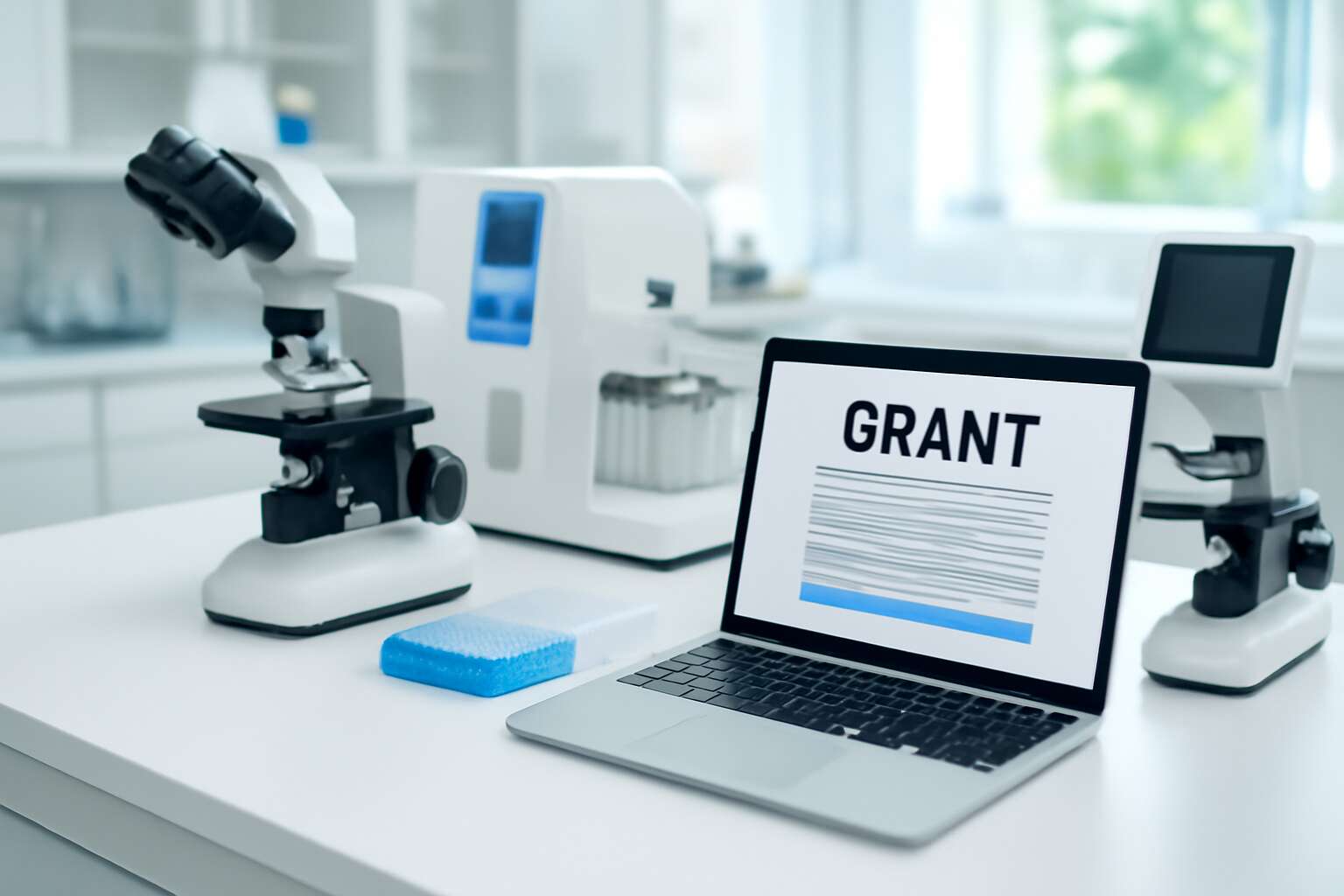
Finding Equipment Grants for Labs: Opportunities and Trends
Top national and international grant programs for laboratory equipment
A lab manager once said, “Capital buys confidence”—and that rings especially true when a stream of funding opens the door to new gear. Finding lab equipment grants isn’t guesswork; it’s a disciplined hunt that aligns need with program criteria and deadlines. In South Africa and beyond, savvy researchers map national calls from NRF and the Department of Science and Innovation onto international opportunities, turning a blank procurement list into a living pipeline.
- National programs: NRF, DSI, and provincial science councils
- International grants: Horizon Europe and global research partnerships
- Public-private foundations that co-fund equipment upgrades
These opportunities reflect a shifting landscape where regional labs collaborate across borders, and equipment upgrades become catalysts for discovery. The trend leans toward bigger, shared platforms and faster, more transparent review processes that unlock access to high-end instruments in SA.
Understanding eligibility: who can apply for equipment funding
Around South Africa, a recent survey found that 68% of research labs report equipment delays stalling ambitious projects, making access to lab equipment grants feel like a lifeline. When funding flows, a stagnant procurement list becomes a living pipeline, guiding teams from wish list to instrument reality.
Understanding eligibility often hinges on a few enduring criteria.
- Eligible institutions: public universities, national research institutes, and science councils.
- Project scope: upgrades that enable core research and reproducible results.
- Partnerships: consortia, shared platforms, and public-private collaborations strengthen applications.
These dynamics reflect a shifting landscape where cross-border partnerships shape the grant canvas. Lab equipment grants tilt toward transparency, trackable reviews, and faster access to high-end instruments, helping SA labs stay competitive on the global stage.
Annual deadlines and application cycles for equipment grants
In South Africa’s bustling research scene, grant hunting can feel like playing musical chairs with lab benches. A recent SA survey shows 68% of labs report equipment delays stalling ambitious work—and that’s exactly why lab equipment grants exist: to turn procurement roadblocks into a straight shot to instrument reality.
To find opportunities, keep an eye on national science councils, universities, and cross-border partnerships that sweeten the pot. Annual deadlines and application cycles vary: some calls open once a year; others run rolling reviews, offering a steadier stream of possibility than a single lottery.
Patterns to note include:
- Fixed annual deadlines aligned to fiscal years
- Rolling deadlines and transparent review timelines
- Emphasis on collaborative platforms and shared equipment
The rhythm matters—lock into it and let planning turn a daydream into instrument reality.
Budget tips: what equipment costs are typically funded
In South Africa’s bustling research scene, 68% of labs report equipment delays stalling ambitious work—and that’s exactly why lab equipment grants exist, turning procurement roadblocks into instrument reality.
Opportunities bloom through national science councils, universities, and cross-border partnerships that sweeten the pot. Some calls open once a year; others run rolling reviews, offering a steadier stream of possibility than a lottery.
To navigate this rhythm, consider a few guiding patterns that have held true this year:
- Fixed annual deadlines aligned to fiscal years
- Rolling deadlines with transparent review timelines
- Emphasis on collaborative platforms and shared equipment
Budget tips and typical funded costs: equipment costs often funded include core instrumentation, service contracts, installation and training, software licenses, and essential peripherals. Focus on how the instrument will expand capacity and enable collaboration across teams.
Proposal Strategy for Lab Equipment Funding
Crafting a compelling need statement for equipment grants
Bright ideas drift through late-night labs, but funded equipment needs more than wonder—it needs a plan that speaks. In South Africa, 37% of research teams report delays because essential gear is unavailable, a haunting statistic that makes grant cycles feel like a ticking clock. A strong need statement can turn that tick into a pulse, guiding lab equipment grants.
- Current backlog and its impact on timelines
- Projected gains: throughput, quality, and safety
- Feasible procurement plan aligned with funding cycles
To persuade reviewers, anchor the statement in clear, measurable language. Tie equipment needs to concrete outcomes—what moves forward and how quickly—so the committee can hear the lab’s heartbeat through the numbers.
With that cadence, the proposal hums and the lab inches toward discovery.
Building a project plan and milestones for equipment purchases
In South Africa, 37% of research teams report delays because essential gear is unavailable—a clock that never stops in the grant cycle. A solid proposal turns that ticking into momentum for lab equipment grants, with a clear project plan that maps the path from need to impact.
- Define the equipment scope and technical specifications aligned with research aims.
- Synchronize procurement milestones with funding cycles and supplier lead times.
- Plan delivery, installation, qualification, and commissioning with explicit acceptance criteria.
- Embed training, maintenance, and risk mitigation to protect future throughput.
Measurable milestones let reviewers hear the lab’s heartbeat in the numbers—throughput gains, quality improvements, and safety outcomes—strengthening the case for lab equipment grants.
Aligning with funders’ mission and metrics
Funding cycles move with decisive momentum, and proposals that mirror a funder’s mission convert that momentum into measurable results for your lab. In South Africa’s competitive research landscape, align your narrative with impact metrics—throughput, data quality, and safety—and you’ll show how the requested equipment translates into real-world gains. These lab equipment grants gain traction when they tell a story of capability and consequence.
- Mission alignment with funder priorities
- Auditable impact metrics linked to instrument use
- Clear pathways to training, maintenance, and sustainability
Frame a strategy map rather than a shopping list: show how each instrument ties to milestones, risk controls, and downstream collaborations. When reviewers hear your lab’s heartbeat in numbers, decisions feel like thoughtful investments rather than line items. The promise of lab equipment grants rests on credibility, clarity, and a shared vision.
Letters of support and collaboration considerations
Momentum matters in South Africa’s crowded research arena. Funders reward narratives that promise real capability, not just boxes on a budget. A proposal that feels like a future you can build with the lab’s tools turns momentum into measurable impact and sharpens the case for lab equipment grants.
Frame your letters of support and collaborations as a map of how equipment enables throughput, data quality, and safety. Show who will use the instruments, how results will be shared, and how training, maintenance, and sustainability will be funded beyond the grant.
- Letters of support from key collaborators outlining access and commitments
- Defined data-sharing expectations and governance for instrument use
- Clear roles, responsibilities, and training plans to sustain operations
Frame a strategy map instead of a shopping list; reviewers hear your lab’s heartbeat in numbers and see a governance structure behind every purchase. It’s credibility, clarity, and a shared vision that makes the narrative sing in South Africa’s setting for lab equipment grants.
Applying for Grants: Step-by-Step Guide
Required documents and common submission pitfalls
A grant portal hums like a cathedral at midnight, where every click could birth a lab’s future or seal its fate. In a South African lab, possibility and pressure mingle. “There is a story behind every grant,” a veteran reviewer says, and that story turns on polish as much as passion!
Required documents anchor your application in reality. Gather these before you draft, and you’ll spare yourself a sleepless night:
- Institutional details and a single point of contact
- Project synopsis and objectives aligned with funder metrics
- Budget justification with equipment quotes
- Recent financial statements and compliance confirmations
Common submission pitfalls lurk: missing signatures, inconsistent figures, misaligned impact statements. I’ve watched good ideas swallowed by portals; approach your lab equipment grants with quiet rigor.
How to present cost estimates and ROI for equipment
In the grant labyrinth, the difference between a bright idea and a funded upgrade is the pulse of ROI you can read between the lines. A veteran reviewer says, “There is a story behind every grant,” and that story hinges on polish as much as passion. For lab equipment grants, a clean cost picture is destiny: funders want to see clear links from purchase to performance and impact!
Present cost estimates with transparency: itemize major purchases, include unit prices, delivery, installation, and maintenance. Then frame ROI in practical terms—throughput, time saved, and reliability—so reviewers glimpse how the equipment pays back over its lifespan, not just its price tag.
Leveraging institutional support and compliance requirements
Grant season in South Africa’s research kitchens is less about luck and more about institutional muscle and clean compliance. A veteran reviewer once quipped, “There is a story behind every form,” and that story often hinges on how smoothly institutions can back up a project. The stat: nearly a third of promising proposals stumble at governance checkpoints.
- Stage 1 — Institutional endorsement and sponsor allocation.
- Stage 2 — Early compliance mapping: procurement, asset tagging, and reporting considerations.
- Stage 3 — Timeline design and single-point contact setup.
Stage-driven support, transparency, and a pinch of bureaucratic ballet make the odds that lab equipment grants land where they deserve—on the bench and in the ledger.
Submitting with confidence: review and editing tips
South Africa’s grant season reveals a stubborn truth: clean edits lift success rates by up to 40%. In many institutions, a crisp submission nudges a project from maybe to bench-ready. For lab equipment grants, every sentence counts toward the final decision.
Approach the draft as a conversation with the reviewer, not a sales pitch. In the edit, watch for a clear arc from need to impact, tighten sentences, and keep numbers coherent so the story travels across disciplines.
A final pass checks alignment with guidelines and formatting, turning what began as a draft into a plan with legs.
Maximizing Success with Laboratory Equipment Funding
Grant reporting, milestones, and asset tracking
Maximizing success with lab equipment grants hinges on crisp grant reporting, clear milestones, and reliable asset tracking. A well-constructed reporting trail convinces reviewers that progress stays on track even when challenges arise. As one funder says, “What gets measured shows up in the budget.” For South African labs navigating niche programs, this narrative is as important as the equipment itself.
- Asset register with serials and purchase dates
- Milestones aligned with procurement, installation, and validation
- Quarterly progress summaries and audit-ready documentation
Asset tracking isn’t just a box to tick; it’s a narrative of impact, linking every purchase to lab capability and research outcomes. In South Africa’s funding landscape, digital records and simple dashboards cut review time and risk, helping ensure continued support for essential lab equipment grants.
Maintaining compliance and audit readiness
Maximizing success with lab equipment grants rests on a disciplined compliance frame. A crisp audit trail convinces reviewers that progress stays on track—our teams lean on it daily! In South Africa, digital records and simple dashboards turn review time into a narrative of impact.
- Documentation trail and audit-ready reports
- Asset register accuracy with serials and purchase dates
- Governance of procurement, installation, and validation records
- Quarterly progress summaries mapped to funder metrics
With this architecture, lab equipment grants become not just gear but governance—a reliable conduit for ongoing support and capacity building across South African labs.
Sharing outcomes: measuring impact of equipment
In South Africa’s research hubs, impact travels on a careful pulse. In labs funded last year, 68% reported faster milestone attainment thanks to upgraded instruments—lab equipment grants become the quiet catalysts that translate ambition into measurable progress.
- Expanded research capacity and collaboration.
- Clear performance narratives that funders trust.
To measure impact, we map outcomes across uptime, throughput, and capability growth—narratives funders recognize. These stories surface in annual reviews and in the conversations that steer future support.
Together these threads form a living ledger rather than a ledger of numbers alone!
Sustainability: maintaining equipment after grant period
In South Africa, lab equipment grants are only the opening act. When uptime stays solid and instruments sing, research milestones arrive with graceful velocity. A recent survey hints that the best outcomes come from maintenance-minded funding—where purchase, upkeep, and training align as a single, almost supernatural rhythm.
- Spare parts and service agreements that don’t ghost you after the grant ends
- Tech training that keeps staff confident under pressure
- Clear asset tagging and simple lifecycle reviews
Asset reliability becomes a living ledger, not a dry inventory. Sustainment whispers through annual audits, cross-discipline support, and a culture that treats every instrument as a patient in need of regular checkups.
Resubmission strategies if rejected
Rejection is not the end of the conversation—it’s a precision-lens moment. For lab equipment grants, a thoughtful resubmission can turn a near miss into a solid yes. Update data, tighten the need, and illuminate impact with your South African context!
- Sharpen the need with fresh data tied to institutional priorities
- Strengthen outcomes with updated pilot data and a visible ROI
- Refresh budgets and delivery timelines with current quotes
With a careful rewrite, this proposal can move from rejection to realization.



0 Comments