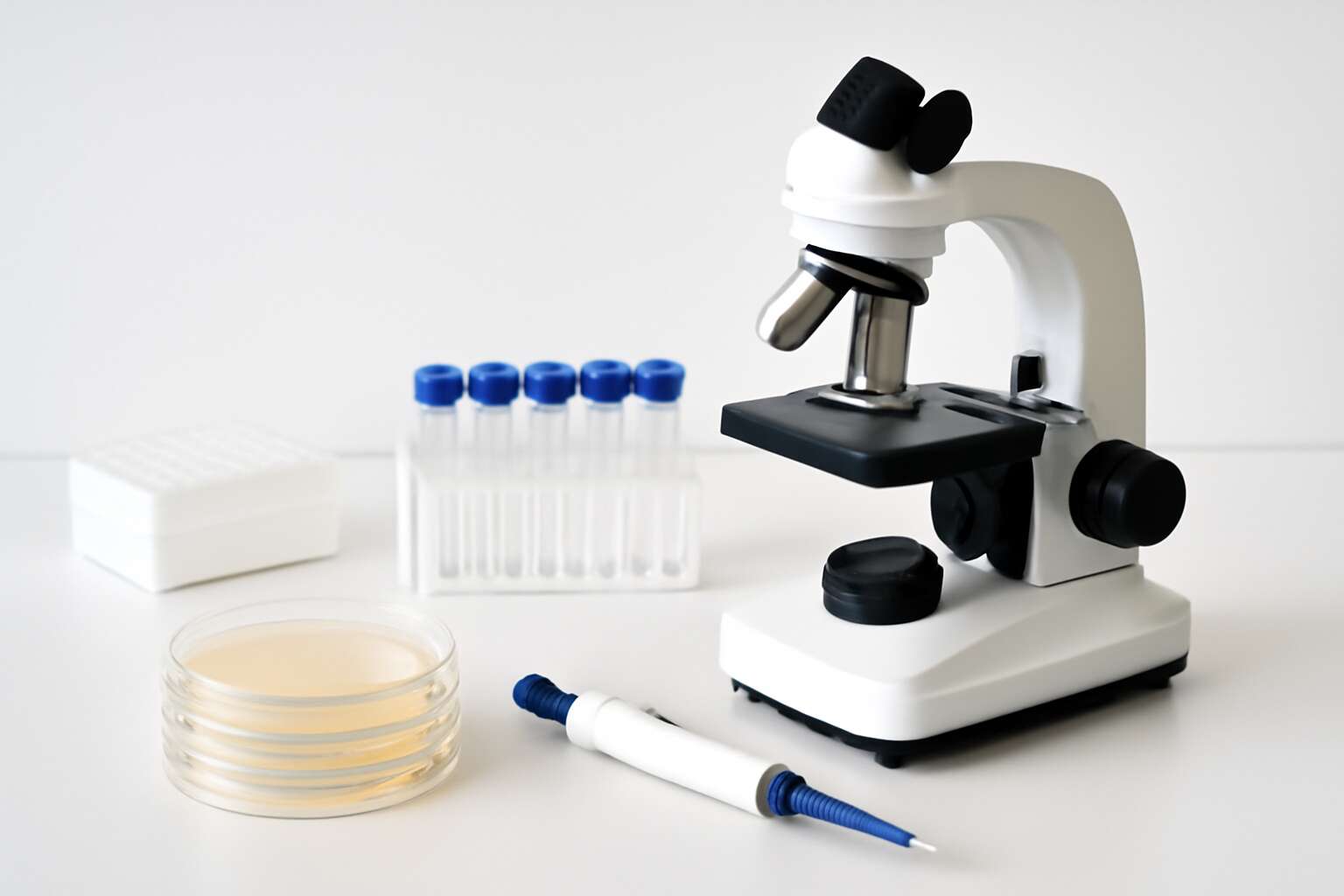
Overview of Microbiology Equipment and Tools
Core equipment categories for microbiology workflows
Within every microbiology lab, a single tool can rewrite a day’s work. The right instruments turn complexity into clarity, and the best research begins with dependable gear. This overview of lab equipment for microbiology guides readers toward reliable choices, blending precision with accessible know-how.
Core equipment falls into a few key categories that support every microbiology workflow.
- Biosafety cabinets and containment systems
- Microscopes and imaging systems
- Incubators, ovens, and temperature-controlled devices
- Pipettes, dispensers, and volumetric tools
- Centrifuges and microcentrifuges
- Refrigeration, freezers, and storage solutions
In South Africa, sunrise washes across stainless benches, while the centrifuge’s rhythm becomes a metronome for discovery! A well-chosen set of tools embodies a culture of care, curiosity, and compliance—quietly powering breakthroughs in everyday labs.
Building a starter kit for teaching labs
Across South Africa’s teaching labs, a well-crafted starter kit can turn a day of experiments into a revelation. A compact package of reliable tools accelerates learning, boosts student confidence, and keeps safety front and centre. This overview highlights practical lab equipment for microbiology that fits a classroom’s pace and budget, while preserving scientific rigor.
Think portable, durable, and easy to sanitize. The kit focuses on essentials: a beginner microscope for real-time observation, sterile consumables for safe handling, simple temperature-controlled devices, and dependable PPE. With clear guidance and friendly interfaces, learners move from theory to practice without the fog of cluttered gear.
- Beginner-friendly microscope and prepared slides
- Sterile consumables, tubes, and basic glassware
- Protective PPE set plus waste disposal options
This approach keeps bench work precise and approachable, aligning with South African teaching rhythms where curiosity meets discipline in everyday labs.
Budget considerations and procurement tips
In South Africa’s classrooms, well-chosen lab equipment for microbiology can turn curiosity into mastery. Durable, easy-to-sanitize gear shines under a single lamp—tools that endure from first observation to final slide. A thoughtfully curated kit does more than illuminate experiments; it grants confidence, safety, and a touch of scientific elegance to every learner.
Budgeting means weighing upfront costs against long-term reliability. Prioritize items with local service, calibration support, and clear warranties. When possible, seek refurbished options with documentation to stretch funds while keeping scientific rigor intact.
- Source from reputable South African distributors with local support
- Consider total cost of ownership, including consumables and maintenance
- Check warranty, spare parts availability, and calibration services
- Plan for training and safe handling gear to complement the core items
This mindful approach keeps the SA classroom’s lab equipment for microbiology aligned with budget realities, turning each decision into a quiet act of stewardship!
Microscopy and Imaging Tools for Microbiology
Light microscopy basics and accessories
Microbiology’s quicksilver moment happens through the eyepiece. In a typical lab, light microscopy is the quiet heavyweight—40% of image-based analysis hinges on what you can coax from a slide with a beam of light. Mastering light microscopy basics lets you distinguish contrast, resolution, and focus without summoning a wizard. When the sample cooperates, you get crisp silhouettes, even with modest budgets, and the results feel surprisingly cinematic.
Accessories widen the dialogue between organism and observer. Phase-contrast objectives, darkfield condensers, immersion oil, and reliable camera adapters turn ambiguity into clarity.
- Phase-contrast objectives
- Darkfield condensers
- Immersion oil and high-NA lenses
This is part of lab equipment for microbiology in South Africa’s labs, marrying practicality with a touch of theatre.
Advanced imaging options: phase-contrast, dark-field, and fluorescence
In South Africa’s microbiology labs, imaging can redefine what a slide reveals; advanced options shave days off results, with up to 30% faster interpretations now common. Phase-contrast, dark-field, and fluorescence each tell the story differently, letting researchers see living organisms, subtle morphology, and tagged components without excessive prep.
- Phase-contrast yields high-contrast silhouettes of living cells without stains.
- Dark-field highlights edges and motility in challenging specimens.
- Fluorescence reveals specific proteins or nucleic acids with labeled probes.
This triad sits at the heart of lab equipment for microbiology in South Africa, marrying theatre with rigor.
Staining, slide prep, and sample mounting
Across South Africa’s microbiology labs, a well-prepared slide can reveal its story in seconds—cutting interpretation time by as much as 40% when staining and mounting are executed with a steady plan.
Stains set the narrative: Gram for general bacteria, Ziehl-Neelsen for acid-fast organisms, and simple stains for quick morphology checks. Slide prep begins with spotless glass, smooth covers, and calibrated fixation, followed by brief, gentle rinses to avoid artefacts. The right mounting medium preserves color and prevents fading, turning a fleeting image into a lasting record—an essential element in the lab equipment for microbiology.
- Clean glass slides and coverslips
- Staining reagents and fixatives
- Staining jars, racks, and timers
- Mounting media and coverslips
- Labeling supplies and storage trays
Pairing careful staining with disciplined mounting keeps images sharp under digital microscopes, reducing glare and artefacts. In South Africa, the choice of materials supports consistency from Cape Town to Polokwane.
Digital capture and image analysis software
Imaging moves at the speed of discovery. In South Africa’s microbiology labs, digital capture and image analysis are shaving interpretation time by up to 40%, turning complex micrographs into clear decisions in moments.
Smart microscopy software anchors the workflow, handling capture, calibration, and automated measurements with a quiet reliability. It supports multi-channel images, focus stacking, and reproducible color thresholds that keep results consistent from Cape Town to Polokwane.
- Quantitative analysis of colonies and cells
- Automated measurement and reporting
- Exportable data in standard formats
Used within the broader lab equipment for microbiology ecosystem, this software helps turn pictures into records, not guesses—and that clarity matters for every SA lab.
Culture, Growth and Incubation Equipment
Incubators and temperature control strategies
Across South Africa’s teaching and research labs, precise incubation can dramatically boost culture viability, with experiences reporting up to 60% faster growth when temperature control is flawless. The right lab equipment for microbiology becomes the quiet engine of discovery, turning curious samples into dependable data. From benchtop incubators to full-temperature systems, the aim is steady warmth, uniform humidity, and reproducible results that stand up to scrutiny. A seasoned technician notes, “Consistency is the heartbeat of growth!”
- Stable temperature profiles and uniform heat distribution
- Programmable ramp rates to mimic natural growth cycles
- Redundant sensors and automated alarms for drift detection
When combined with routine calibration and maintenance, these tools ensure reliable outcomes across teaching labs and research cores in South Africa.
Shakers, orbital mixers, and aeration
In the microbiology lab, culture thrives on motion as much as heat. In South Africa’s teaching labs, a steady orbital shaker or compact incubator-stirrer balances shear and oxygen delivery, turning uncertain samples into cohesive populations. A seasoned technician notes, “Consistency is the heartbeat of growth!” and the impact is measurable: uniform agitation yields reproducible growth curves and cleaner samples for analysis. When aligned with the broader lab equipment for microbiology toolkit, these devices become the engine of discovery.
- Programmable orbital paths for gentle, continuous mixing
- Integrated speed controls, alarms and fault monitoring
- Low-vibration operation suited to sensitive cell cultures
Aeration strategies—delicate but essential—rely on baffled vessels, breathable seals and careful gas exchange. When paired with reliable shakers, they promote even oxygenation and nutrient distribution, preventing gradients that skew results. The right configuration supports steady growth while remaining compatible with routine calibration and maintenance.
Agar media, petri dishes, and sterile handling supplies
In SA teaching labs, up to 40% of plate outcomes trace to contamination—proof that bench discipline matters. Culture thrives on careful preparation and a dash of on-bench theatre. Culture, growth and incubation equipment set the tempo: agar media feed the colonies, petri dishes cradle their progress, and sterile handling supplies keep intruders at bay. When the trio works in harmony, even tricky samples march toward clear, teachable growth curves.
Choosing the right kit isn’t vanity; it’s integrity. Thoughtful sourcing of lab equipment for microbiology ensures reliable results, lot traceability, and clean additions to the bench culture. Agar media, plates, and sterile consumables should pair with simple storage and clear expiry dates to minimize surprises and maximize learning moments.
- Agar media
- Petri dishes
- Sterile handling supplies
Scale-up equipment: bioreactors and fermenters
A single liter can whisper tomorrow’s breakthrough, but only if the vessel keeps the whisper steady. In my lab, culture, growth and incubation equipment rise from bench-top routines to scale‑up ambitions, where bioreactors and fermenters provide the steady drumbeat of aeration, agitation, and temperature control.
Choosing the right scale-up kit is about integrity and repeatability. This is essential lab equipment for microbiology in SA teaching labs; bioreactors deliver controlled stirring and gas exchange, while fermenters enforce sterility, clean‑in‑place cycles, and predictable residence times.
- Bioreactors
- Fermenters
- Scale-up strategies
When the trio—vessel, sensor, and guard rails—align, even stubborn strains reveal teachable growth curves and repeatable results that illuminate the classroom and the lab alike.
Sterilization, Contamination Control and Safety Gear
Autoclaves, sterilization cycles, and monitoring
Every sterile chamber hides a 99% peace of mind! Sterilization is the quiet guardian of microbiology. Autoclaves stand as fortress furnaces, while safety gear—heat-resistant gowns, face shields, and gloves—guards the researcher as if from a dragon’s breath. Sterilization cycles, whether gravity or pre-vacuum, seal and test every vessel for integrity. Monitoring is the moment of truth: cycle parameters logged, steam saturation verified, and load indicators checked. This is a vital slice of lab equipment for microbiology that keeps experiments clean and credible in South Africa’s bustling labs.
- Biological indicators (spore tests) validate sterilization.
- Chemical indicators and integrators confirm temperature and time on each load.
- Regular Bowie-Dick tests and autoclave printer logs monitor air removal and steam distribution.
Contamination control and safety gear are inseparable partners in quality science, ensuring that every autoclave cycle delivers reproducible results and compliant records for SA standards.
Aseptic technique supplies and sterile consumables
The lab hums with a quiet accord: sterilization is the unsung shield between inquiry and contamination. We treat steam like a patient mentor, a protective cocoon around each vessel! Contamination control and safety gear are not afterthoughts; they are the living discipline that keeps experiments credible in South Africa’s bustling labs.
Aseptic technique supplies keep drift and doubt at bay. Thoughtful handling starts with sterile consumables and disciplined PPE.
- Sterile gloves and heat-resistant gowns
- Face shields or goggles for splash protection
- Sterile swabs, tubes, and transfer pipettes
Cleanliness and traceability are not rituals but risk management. When aseptic technique is executed with calm precision, every sample moves through with integrity, and the resulting data gains weight. This is where lab equipment for microbiology meets human discipline, turning curiosity into credible discovery.
Biosafety cabinets, laminar flow hoods, and containment basics
Contamination can wipe weeks of work in a single day. In South Africa’s bustling labs, clean air is the quiet backbone of discovery—sterilization acts as a shield, containment the steady hand guiding every step. The phrase lab equipment for microbiology carries weight beyond tools; it stands for discipline, care, and safe curiosity.
Sterilization is a constant companion, weaving heat, time, and technique into a promise that nothing unwanted lingers. Containment basics shape every action: sealed spaces, controlled airflow, and surfaces kept ready for the next sample. Biosafety cabinets protect both people and specimens, while laminar flow hoods guard sterile work at the bench.
Containment basics also hinge on safety gear and practiced habits that travel with you from bench to bench.
- Containment basics: airflow control, sealed enclosures, waste handling
- Safety gear: proper donning, doffing, and clean PPE
A calm rhythm and vigilant respect for conditions—this is the heart of reliable microbiology work.
Waste management and sterilization validation
In South Africa’s bustling labs, a single particle of contamination can wipe days from the slate. Sterilization is the quiet backbone—an invisible firewall you must trust. When you think about lab equipment for microbiology, the phrase carries weight—discipline, clean air, and careful hands!
Sterilization is a constant companion—steam, time, and technique shaping a definitive boundary that keeps samples pristine. Sterilization validation acts as the final audit, with indicators and records confirming that nothing unwanted lingered during the cycle.
Containment basics hinge on sealed enclosures, controlled airflow, waste handling, and waste management.
- Biological indicators
- Chemical indicators
- Documentation and traceability
Safety gear travels with you from bench to bench—gloves, eye protection, and PPE protocols—ensuring that both people and specimens stay safe throughout the workflow.
Molecular Biology and Analytical Equipment
PCR and qPCR equipment essentials
Across South Africa’s research corridors, more than 60% of routine microbial analyses now hinge on real-time PCR, a beacon for speed and specificity. In this evolving field, the right lab equipment for microbiology turns raw samples into reliable stories, stitched by precision and care.
PCR and qPCR demand a single, steadfast instrument: a thermocycler with real-time fluorescence detection, clean optics, and software that translates curves into clear conclusions. A contaminant-free workflow—barrier tips, RNase-free tubes, and meticulous calibration—ensures that data remains trustworthy amid busy days.
- Real-time PCR instrument with fluorescence detection
- Validated master mixes and target-specific probes
- RNase/DNase-free tubes and barrier-filter tips
- Comprehensive data analysis software for curve interpretation
Together, these essentials anchor robust microbiology workflows from gene to genome.
Centrifuges, rotors, and microcentrifuge use tips
Across South Africa’s research corridors, nearly 70% of routine sample prep hinges on centrifugation, turning opaque extracts into readable data. In molecular biology, the centrifuge, rotor, and microcentrifuge trio must sing in concert: clean rotors, balanced tubes, and a motor that purrs rather than roars. When calibrated and housed in a contamination-controlled workspace, these tools transform raw material into trustworthy narratives—precious clues awaiting interpretation. This is why reliable lab equipment for microbiology matters.
Tips to wield this equipment with precision:
- Balance loads meticulously and match tube volumes to rotor type
- Pre-cool rotors for temperature-sensitive spins to preserve integrity
- Always use RNase/DNase-free tubes and verify calibration before runs
Used wisely, centrifugation becomes a quiet engine of discovery.
Spectrophotometers, plate readers, and assay instrumentation
Across South Africa’s research corridors, more than 65% of routine assays hinge on spectrophotometers and plate readers, turning shy signals into readable data. In molecular biology, these analytical sentinels sing in harmony—absorbance, fluorescence, and luminescence weave stories from tiny signals. When calibrated and housed in a clean, controlled workspace, they transform raw samples into narratives scientists can trust, guiding experiments with quiet certainty—an essential part of lab equipment for microbiology.
Key capabilities include:
- Spectrophotometers: multi-wavelength measurement and precise absorbance readouts
- Plate readers: 96- and 384-well formats with luminescence, fluorescence, and colorimetric assays
- Assay instrumentation: kinetic measurements, multiplex detection, and integrated software for data management
Together, these tools form the quiet backbone of lab equipment for microbiology, offering reliability and insights without shouting. They invite researchers to read the world through wavelengths and, in doing so, to write the next page of discovery.
DNA/RNA extraction and purification tools
In South Africa’s cutting-edge labs, a majority of microbial workflows hinge on DNA and RNA extraction—the quiet hinge on which discovery turns.
DNA/RNA extraction and purification tools are the gatekeepers: silica-based spin columns, magnetic bead kits, and clean, RNase-free reagents keep samples pure as they pass into downstream analyses.
- Silica-based spin columns
- Magnetic bead–based purification kits
- RNase-free consumables and buffers
That’s essential lab equipment for microbiology—quiet, precise, and ready to capture the genome’s whisper.
Data acquisition, storage, and basic bioinformatics support
A lab director quips, ‘If you can’t measure it, you can’t manage it’—and in South Africa’s cutting-edge facilities, that joke doubles as a blueprint. Molecular biology and analytical equipment now orbit data acquisition, storage, and basic bioinformatics, turning noisy runs into repeatable stories. Clean signals from qc’d machines, robust metadata, and audit trails keep discovery audible on a busy bench. The right lab equipment for microbiology makes the genome whisper.
Data capture and storage are not afterthoughts; they’re the pipeline. Here are essentials:
- Seamless data capture from sequencing, qPCR, and spectrophotometry
- Centralized storage with versioning, backups, and access controls
- Basic bioinformatics support for QC, alignment, and annotation
When instrument outputs feed into a unified data ecosystem, researchers gain reproducibility and faster validation, with clearer narratives from raw reads to interpretable results. In South Africa’s labs, light analytics paired with solid storage defend integrity and keep progress steady across projects.


0 Comments